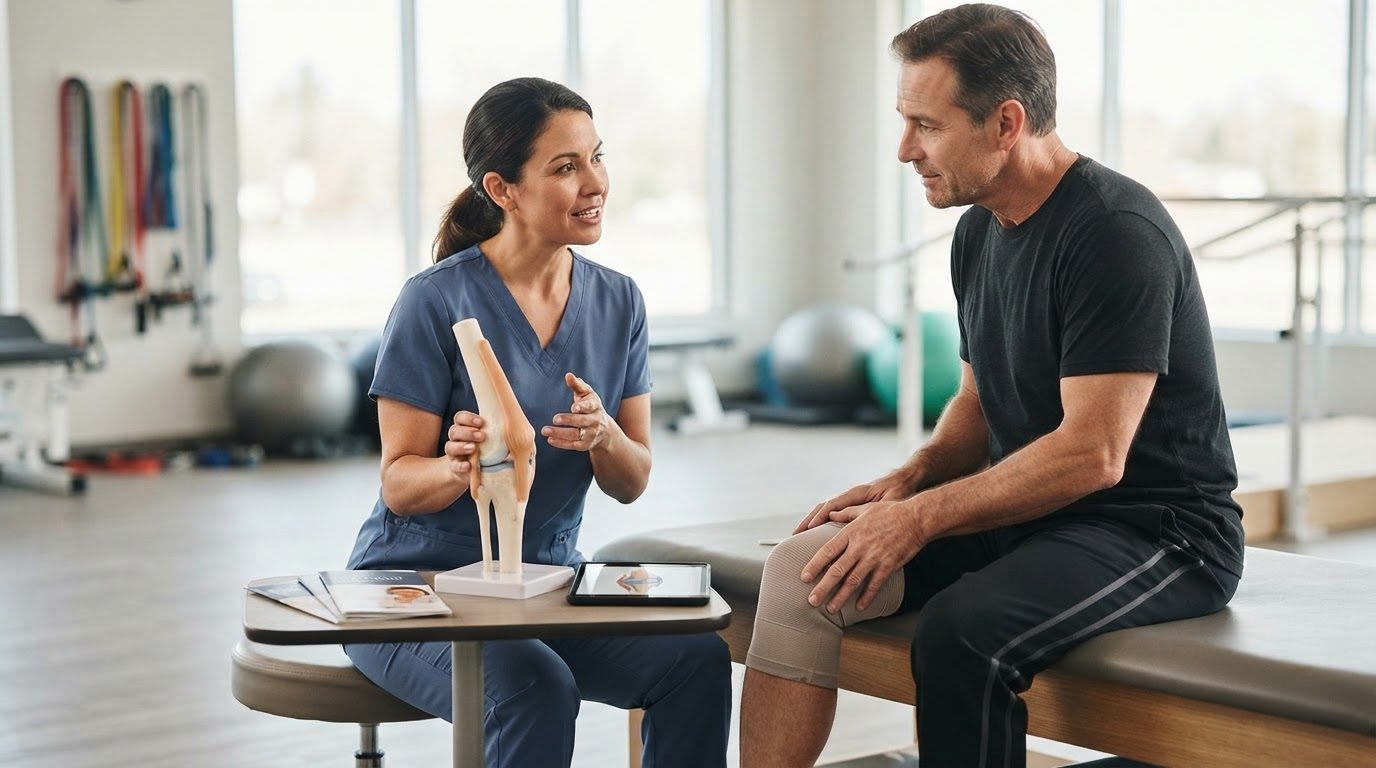
Knee pain treatment depends less on the word “knee” than on what caused the pain, where it appears, and how the joint behaves. A sore knee after an unusual hike is managed differently from a knee that repeatedly gives way, swells, or hurts at night. Treating the symptom without understanding that difference is one reason pain often returns.
For guidance on Knee pain treatment, start by identifying whether this is a short-term flare-up or a problem that is changing how you walk, exercise, work, or sleep. A mild strain often settles with sensible home care. Persistent or worsening symptoms deserve an examination rather than an endless cycle of rest and resumed activity.
True Health Chiropractic and Acupuncture in Lombard describes an assessment that considers hip strength, ankle motion, gait, joint stability, and old injuries—not just the painful spot. Its care is aimed at people dealing with problems such as runner’s knee, tendon irritation, arthritis, meniscus symptoms, ligament sprains, IT band pain, or stiffness after surgery.
First, decide whether home care is reasonable
For a recent, mild ache without major swelling or loss of function, reduce the activity that triggered it for a short period. This does not necessarily mean complete bed rest. Gentle movement is usually preferable to keeping the knee rigid, provided it does not sharply increase pain.
Helpful early measures include:
- Ice wrapped in a towel for short intervals can ease pain and swelling. Do not apply ice directly to skin.
- Elevating the leg and using a comfortable compression sleeve or elastic wrap may reduce swelling. The wrap should not cause numbness, tingling, discoloration, or increased pain.
- Acetaminophen can help with pain, while anti-inflammatory medicines such as ibuprofen or naproxen can help some people. Follow the package directions and ask a pharmacist or clinician before using them if you have kidney disease, a history of stomach ulcers or bleeding, heart failure, uncontrolled high blood pressure, take blood thinners, or are pregnant. Do not combine medicines that contain the same ingredient.
- Switch temporarily to low-impact activity, such as easy cycling or swimming, if those movements are comfortable. Avoid repeatedly testing the knee with running, jumping, deep squats, or heavy lifting.
A knee that is improving steadily can usually be reloaded gradually. If pain returns each time normal activity resumes, the answer is probably not simply “more rest.”
What the pain pattern can tell you
Location is useful, but it is not a diagnosis. The same area can hurt for several different reasons, and imaging is not always needed at the first visit.
Pain at the front of the knee
Pain around or behind the kneecap often worsens with stairs, squatting, running, or sitting with the knee bent for a long time. This pattern is commonly associated with kneecap-tracking problems or patellofemoral pain, but weakness at the hip, sudden training changes, and altered movement mechanics can contribute as well.
Treatment generally emphasizes temporarily reducing aggravating loads, then rebuilding strength and control in the thigh and hip. Forcing through painful squats or repeatedly “checking” the knee under load tends to prolong irritation.
Pain below the kneecap
Pain in the tendon connecting the kneecap to the shin often follows jumping, running, or another increase in training. Tendon problems usually respond better to a carefully progressed strengthening program than to complete inactivity. The progression should be adjusted if pain becomes sharper, swelling develops, or function deteriorates.
Pain along the inside or outside
Pain on the inner side can follow a ligament injury or irritation of structures inside the joint. Outer-knee pain is sometimes linked to the tissues along the outside of the thigh, especially in runners and cyclists. A clinician needs to examine the knee because location alone cannot distinguish a minor overload from a more significant injury.
Pain with locking, clicking, or giving way
Clicking without pain is often harmless. Clicking combined with swelling, catching, or a feeling that the knee shifts deserves assessment. True locking—being unable to fully straighten or bend the knee—can indicate an internal joint problem and should not be managed by repeatedly forcing the joint.
When an examination matters more than another home remedy
Arrange medical evaluation if pain lasts more than several days, keeps returning, or interferes with ordinary activities. Seek help sooner if the knee is swollen, unstable, weak, or painful after a twist or impact.
Urgent care is appropriate when:
- You cannot bear weight or cannot move the knee normally.
- The knee looks deformed after a fall, collision, or other trauma.
- Swelling appeared rapidly after an injury.
- The joint is hot and red, especially with fever or feeling unwell.
- The calf is swollen and painful, or you develop sudden shortness of breath or chest pain.
- You have numbness, a cold foot, or major color change below the knee.
A clinician may assess strength, range of motion, walking mechanics, ligament stability, and signs of meniscus or tendon involvement. X-rays are useful for bones and arthritis; MRI is more selective and is generally considered when the examination and symptoms suggest an internal soft-tissue problem or when treatment has not worked.
Treatment usually progresses from simpler to more targeted care
There is no single best knee pain treatment for every cause. The sensible plan is usually the least invasive approach likely to address the problem, with escalation when symptoms or examination findings justify it.
Exercise and physical rehabilitation
Strengthening the muscles around the knee and hip can improve load tolerance and control. A rehabilitation plan may include mobility work, balance exercises, gradual resistance training, and changes to running, lifting, or occupational technique.
The exercise should challenge the knee without creating a substantial flare that lasts into the next day. A physical therapist, sports-medicine clinician, or other qualified professional can adjust the program when pain is persistent or the diagnosis is uncertain.
Activity and weight adjustments
If body weight is contributing to joint load, gradual weight reduction can lessen stress on the knee. This is not a judgment about appearance; it is a mechanical consideration and only one part of treatment. Low-impact exercise, strength training adapted to symptoms, and nutrition support are often more practical than abruptly stopping all activity.
Footwear, training surfaces, work demands, and sudden increases in mileage can also matter. Small changes—such as alternating hard and easy sessions or replacing repeated deep knee bends temporarily—may be more sustainable than avoiding movement altogether.
Braces and supports
A brace can provide stability or alter how force travels through the joint in selected conditions. It is not a universal solution, and a poorly fitted brace can be uncomfortable or encourage someone to overload an injured knee. Use one based on professional advice, particularly after a ligament injury or surgery.
Medication and injections
Topical anti-inflammatory medication may be useful for localized osteoarthritis pain and generally produces fewer whole-body effects than oral anti-inflammatories, although it still requires appropriate use. Prescription medicines are sometimes used for inflammatory arthritis or other specific diagnoses.
A corticosteroid injection can reduce inflammation and pain for a period of time in certain joint conditions. It does not repair every source of pain, and repeated injections should be discussed carefully with the treating clinician. Platelet-rich plasma and other injections are offered in some settings, but evidence and suitability vary by diagnosis; ask what problem the injection is intended to treat, what benefit is realistic, and what alternatives exist.
Surgery
Surgery is not automatically the next step when nonsurgical treatment has been tried. It becomes more relevant for certain fractures, severe ligament injuries, mechanically significant internal damage, advanced arthritis, or symptoms that remain disabling despite an appropriate rehabilitation program. A second opinion is reasonable when an operation is proposed and the diagnosis or expected benefit is unclear.
What exercises should you avoid?
Avoid any exercise that causes sharp pain, repeated buckling, increasing swelling, or loss of motion. During a flare, that commonly means pausing deep squats, kneeling, sprinting, jumping, pivoting sports, and heavy leg presses. The exact restriction depends on the injury.
Do not treat pain as a test of toughness. A tolerable, low-level ache during rehabilitation can sometimes be acceptable, but worsening symptoms later that day or the following morning indicate that the load was too high. Replace the movement with a gentler version—such as a shorter range of motion, slower tempo, less resistance, or a low-impact activity—until the knee settles.
Stretches and simple movements
Stretches do not correct every cause of knee pain, but gentle mobility can help when stiffness is contributing. Comfortable thigh, hamstring, calf, and hip stretches may be useful, held without bouncing and stopped if they create joint pain rather than a mild muscle stretch.
Strength is often as important as flexibility. Depending on symptoms, early exercises might include controlled straight-leg raises, supported bridges, sit-to-stand practice from a higher surface, or gentle stationary cycling. These are examples, not a prescription. A swollen, unstable, recently injured, or postoperative knee needs individualized guidance before exercise is progressed.
The aim is not merely to make the knee hurt less for an hour. It is to restore enough motion, strength, and confidence that ordinary walking and the activities you value no longer repeatedly provoke the problem.
